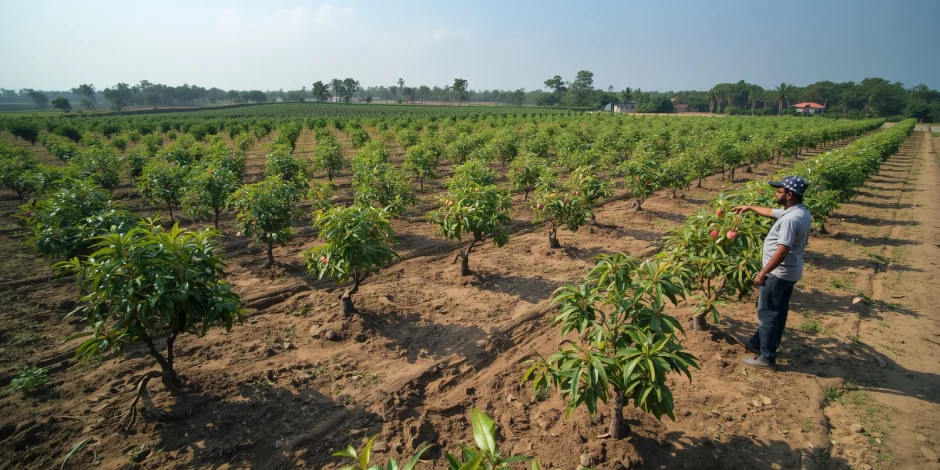


In our Mango GAP series, after covering site selection, cultivation methods, and fertilizer/irrigation management, we now focus on Weed Control, Pruning, and Tree Training, essential maintenance practices that directly influence tree health, light penetration, air circulation, disease prevention, fruit quality, and overall orchard productivity. These steps are critical under Good Agricultural Practices (GAP) to minimize competition for nutrients/water, reduce pest/disease harbors, and shape trees for optimal bearing and easy management, especially important in Rajshahi’s dense mango orchards.
Weed Control in Mango Orchards
Weeds compete aggressively with mango trees for water, nutrients, light, and space, particularly harmful at the tree base, where they create moist, shaded conditions that favor fungal diseases like anthracnose and powdery mildew. Effective, timely weed management keeps the orchard floor clean, improves nutrient and water use efficiency, and makes cultural operations (spraying, harvesting, intercropping) much easier.
- Mechanical methods — the GAP-preferred approach: Lightly cultivate the entire orchard floor using a plough, power tiller, or tractor-drawn disc harrow. Perform the first cultivation right as the monsoon begins (to destroy emerging weeds before they seed) and the second immediately after the monsoon ends (to clear post-rain flush and prepare for dry-season management).
- Spot weeding & manual removal: Regularly hand-pull or shallow-hoe weeds around the tree basin (especially within 1–1.5 m radius) to prevent root competition and reduce humidity around the trunk.
- Mulching: A sustainable GAP technique: Apply a 5–10 cm layer of organic mulch (dry leaves, paddy straw, dried grass, or compost) in the tree basin to suppress weed germination, conserve soil moisture during dry months, moderate soil temperature, and gradually add organic matter as it decomposes.
- Chemical control : Only as last resort: Use only approved, registered herbicides applied precisely (directed spray, shielded nozzles) to avoid drift to tree trunks, fruits, or nearby crops/water sources. Always follow label instructions and GAP safety guidelines.
Consistent weed control reduces pest pressure, lowers disease incidence, saves water and fertilizer, and enhances overall orchard hygiene.
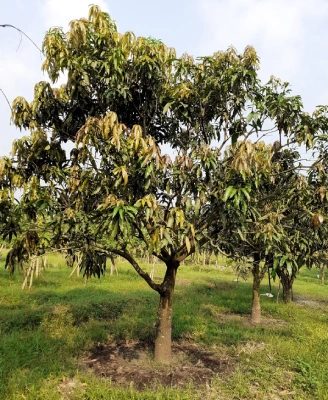 Pruning of Mango Branches
Pruning removes unproductive, diseased, overcrowded, or structurally weak branches to open the canopy, improve light and air movement, promote better fruit set/color/quality, and facilitate pest/disease management and harvesting.
- Best time: Immediately after harvest (late May–July in Bangladesh), wounds heal rapidly during the humid monsoon, and new vegetative flush emerges in time to mature for next year’s flowering.
- What to remove:
- All diseased, dead, dry, weak, broken, or insect-infested branches should be cut back to healthy wood.
- Crowded inner branches that receive little sunlight and rarely produce flowers/fruits.
- Crossing, rubbing, or downward-growing branches.
- Branches that heavily shade adjacent trees or block light to the orchard floor.
- Excessive water sprouts/suckers from rootstock or main trunk.
- During flowering/fruiting: Thin out overcrowded panicles (bud stems) to balance crop load and improve individual fruit size/quality.
- Pruning technique: Use sharp, disinfected secateurs, loppers, or saws. Make clean cuts just above a bud or branch collar at a slight angle to shed water. Immediately apply Bordeaux paste (100 g copper sulphate + 100 g quicklime dissolved in 1 liter water) to all cut surfaces with a brush, this seals wounds and prevents fungal entry (die-back, gummosis, etc.).
- Benefits: Deeper light penetration → better fruit color, sugar content, and uniform ripening; reduced canopy humidity → lower incidence of anthracnose, hoppers, and mealybugs; easier spraying coverage and manual harvesting.
Prune young trees lightly for shape; mature bearing trees more selectively to renew fruiting wood and maintain productivity.
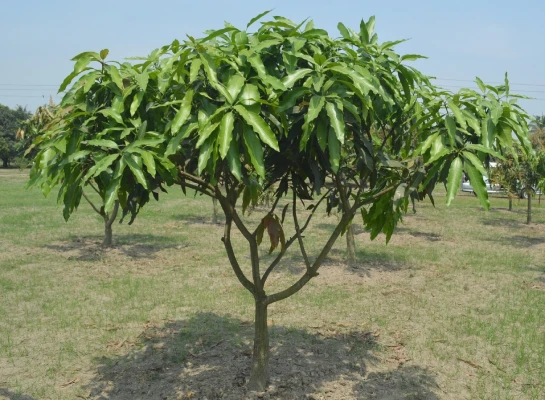 Tree Training for Desired Structure
Training develops a strong, balanced, open framework from the early years, ensuring the tree can support heavy crops, receive maximum sunlight, and remain manageable for decades.
- Start at planting: Select grafts with a straight trunk and well-spaced scaffold branches.
- First 2–3 years: Head back the main stem to 1–1.5 m height after planting to force 3–4 strong primary branches with wide crotch angles (45–60° from trunk) — ideal open-center or vase shape for mango.
- Ongoing training: Select and space scaffold branches evenly around the trunk; remove competing leaders, narrow-angled branches, and excessive upright growth. Maintain central leader dominance in some systems or encourage multi-leader open structure.
- Annual maintenance: After harvest, lightly train mature trees to keep the canopy open, remove excessive vertical growth, and renew lower fruiting branches.
- Wound protection: Apply Bordeaux paste to all pruning/training cuts to prevent infection.
A properly trained tree has an open, spreading canopy with strong limbs, even fruit distribution, reduced wind damage risk, and higher long-term productivity.
Conclusion: Strong Maintenance Practices = Healthier Trees & Better Returns
Mastering weed control, timely pruning, and systematic tree training under GAP transforms your mango orchard from ordinary to exceptional. These low-cost, high-impact practices reduce disease and pest pressure, optimize light and nutrient use, improve fruit quality and size, make spraying/harvesting easier, and extend tree productive life, all leading to higher marketable yields and premium prices in local and export markets. In Rajshahi’s climate, consistent implementation of these techniques can significantly boost profitability while aligning with sustainable and food-safe standards. Start this post-harvest season: clear weeds, prune carefully, apply Bordeaux paste, and shape your trees for the future.
Stay tuned for the next GAP component!
#MangoFarming #GAPMango #MangoPruning #WeedControlMango #MangoTreeTraining #RajshahiMango #SustainableMango #AmrapaliCare #QualityMango #OrchardManagement