

I keep thinking of the significant influence mango cultivation has on our communities’ socioeconomic conditions as I walk through the verdant, sun-kissed orchards of Chapai Nawabganj. Not only is the title “Fruitful Futures: Exploring the Socio-Economic Power of Mango Farming” catchy, but it also captures an important fact that I have personally experienced. Often praised for its sweetness and flavor, the simple mango has the capacity to improve people’s lives, strengthen economies, and promote sustainable development.
The role of mangoes in changing socioeconomic conditions
The role of mangoes in changing socio-economic conditions is significant. Many people’s livelihood depends on mango or mango trade. Many families survive by drying unripe fallen mangoes and making pickles. Aamsatta Only ripe and over-ripe mangoes are produced in Rajshahi and Chapainawabganj districts and sold in the baromonth market. As a result, some money is available in the hands of the farmers in an untimely manner.
During the mango season, loans of more than 1500 crores are transacted with the aim of creating new employment for nearly two lakh people in plantation management, business and transportation. As it is 2-3 times more profitable than other crops, people are leaning more towards mango cultivation and they are also planting new mango plantations in different pasture areas including Barendra. Not only this, many farmers are inter-cropping mangoes with rice, wheat, pulses, ginger, turmeric, dhaincha, kanchu etc. As a result, both the area and production of mangoes are increasing day by day.
From the planting of the mango tree to eating the mangoes, care and maintenance of mangoes is required. The mango orchard owner sells the mango orchard to someone for a few years. He sells it to someone else for more profit (may change hands more than once) or hires some laborers himself to take care of the mango orchard like :- Fertilizer, irrigation, pesticide application, weed control, mango planting, sorting, packing etc. at various times. Many times he himself sells the mangoes in the open market or sells them to dealers. Arat owners maintain contact with wholesalers across the country, including Dhaka, and then transport (vans, bicycles, trucks, buses, trains and launches) to wholesale markets. Wholesale traders sell it in the open market at a higher profit. Many people send mangoes in cartons, baskets and plastic crates to courier services. Different people are involved in each step from planting mango trees to consumption and this has improved their socio-economic status.
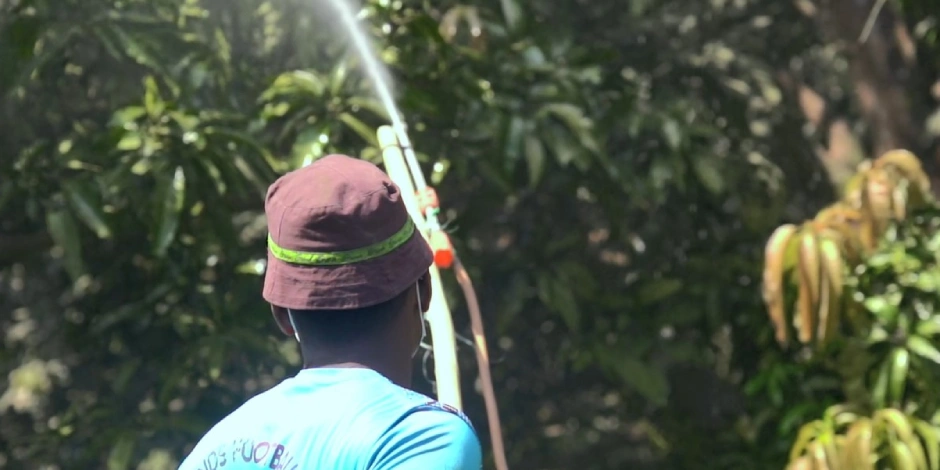
Mango orchards are sprayed with pesticides 5-30 times and sometimes more times in a season in hopes of good yield from mango orchards. Taking advantage of this opportunity, pesticide companies invest about Tk 400 crore annually in Rajshahi and Chapainawabganj districts alone. Through this, pesticide companies and local dealers are benefiting greatly. Different types of cartons, packing boxes, baskets, sacks, ropes and transport systems are required to send mangoes long distances during the mango season. And the small traders build a thriving business as well as the courier business is also economically profitable.

During the mango season, it is often seen that small orchard owners collect mangoes from the orchards and bring them to the local market for harvesting (photo-a), some traders engaged in packing (photo-b), trucks to send mangoes far and wide. Admission (Photo-C)
Conclusion
Reflecting on my journey through the vibrant mango orchards and the stories shared by the resilient farmers, I am reminded of the profound impact that agricultural empowerment can have. Each mango harvested represents not just a potential income but a step towards a brighter future for families and entire villages. The advancements in sustainable farming and fair trade practices further underscore the potential for mango farming to contribute positively to our global community.
In my work, I’ve seen firsthand how mango farming has empowered women, provided education for children, and built stronger, more cohesive communities. As we look to the future, the continued support and investment in this vital sector will undoubtedly yield even greater socio-economic benefits. Let us champion the cause of these hardworking farmers and acknowledge the extraordinary role of mango farming in shaping a prosperous and sustainable world.